Pizzoccheri · Buckwheat · Plant-based · Gluten-free · Pasta · Savoury
VeganBuckwheatPizzoccheri
Rustic buckwheat pasta with potatoes, carrots, Chinese cabbage and cashew Parmesan
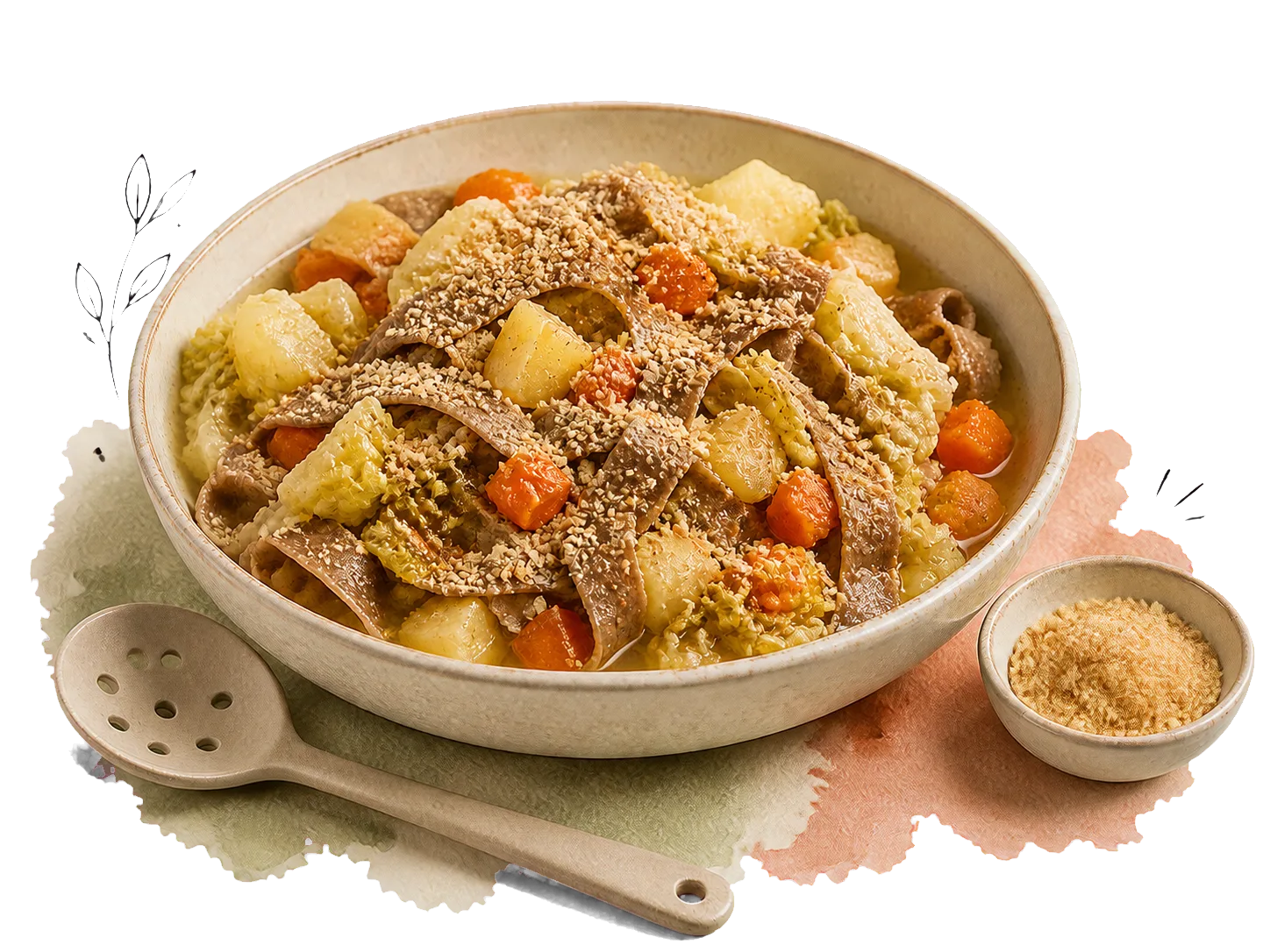
Four lots of 200 and one of 80: buckwheat flour, potatoes, carrots, Chinese cabbage and cashews create an easy-to-remember base. Water, stock, garlic and nutritional yeast are added by feel.
Ingredients
For the buckwheat pizzoccheri
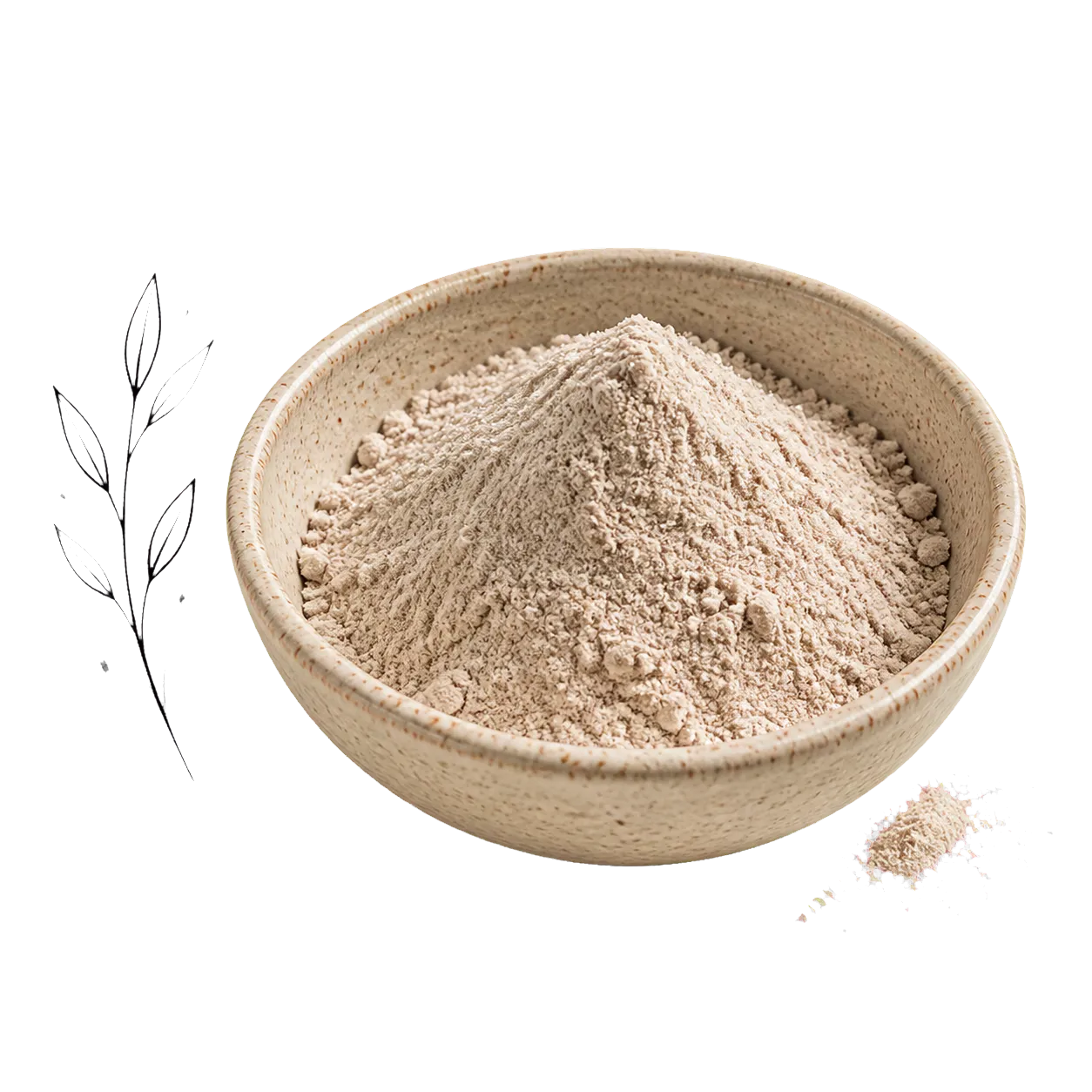
- 200 g buckwheat flour
- about 100–120 ml water
- 1 generous pinch of salt
- a little buckwheat flour for rolling
For the vegetables and stock
- 200 g potatoes
- 200 g carrots
- about 200 g Chinese cabbage
- vegetable stock
- 2–3 garlic cloves, according to taste
For the cashew Parmesan
- 80 g cashews
- 2–3 tbsp nutritional yeast flakes
- about 1 tsp vegetable stock powder
- about 1/2–1 tsp garlic powder
- optional salt
Method
Make the pizzoccheri dough
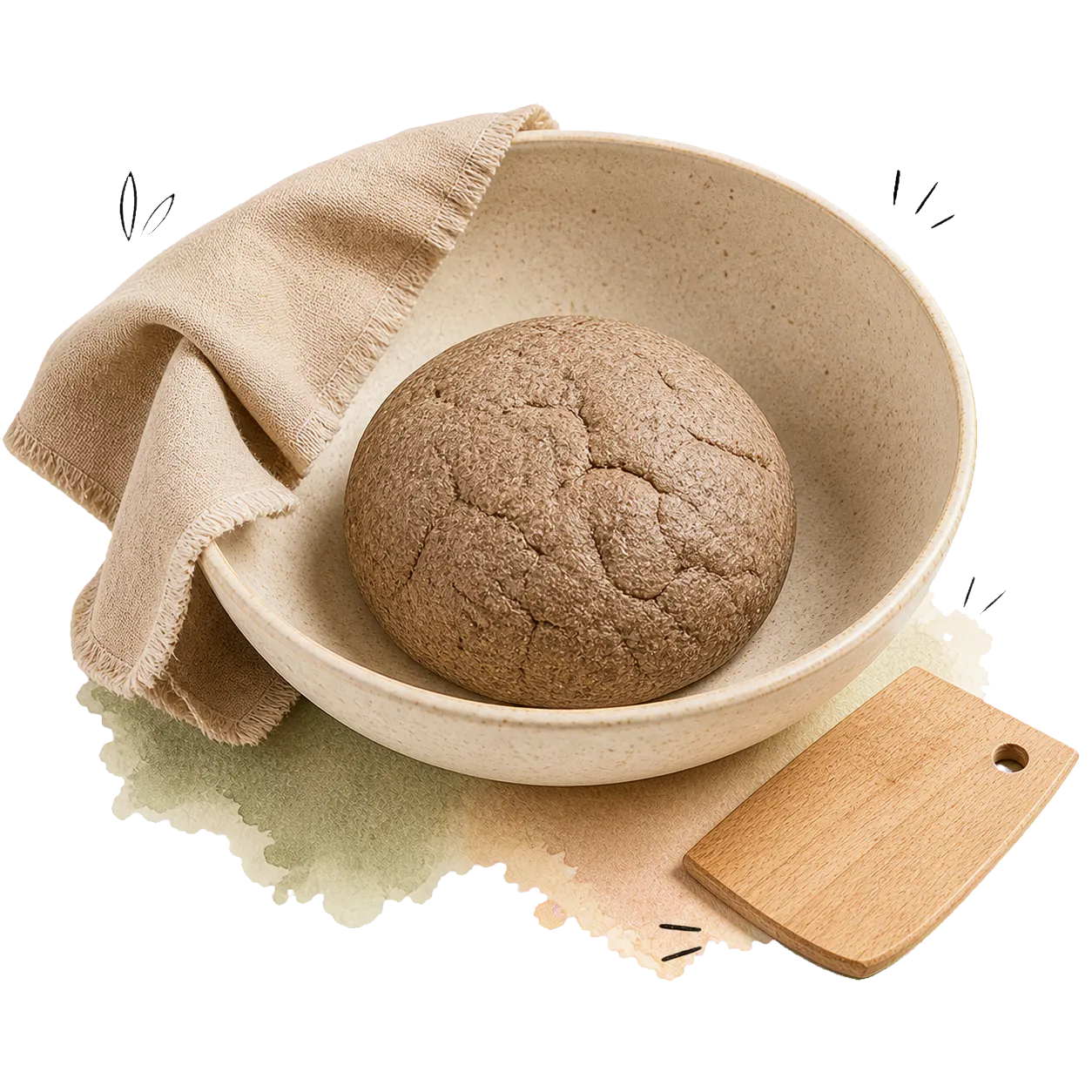
Put the buckwheat flour and salt in a bowl. Add about 100 ml water first and knead. Add any further water gradually, only until the dough is firm, easy to shape and suitable for rolling.
Prepare the vegetables
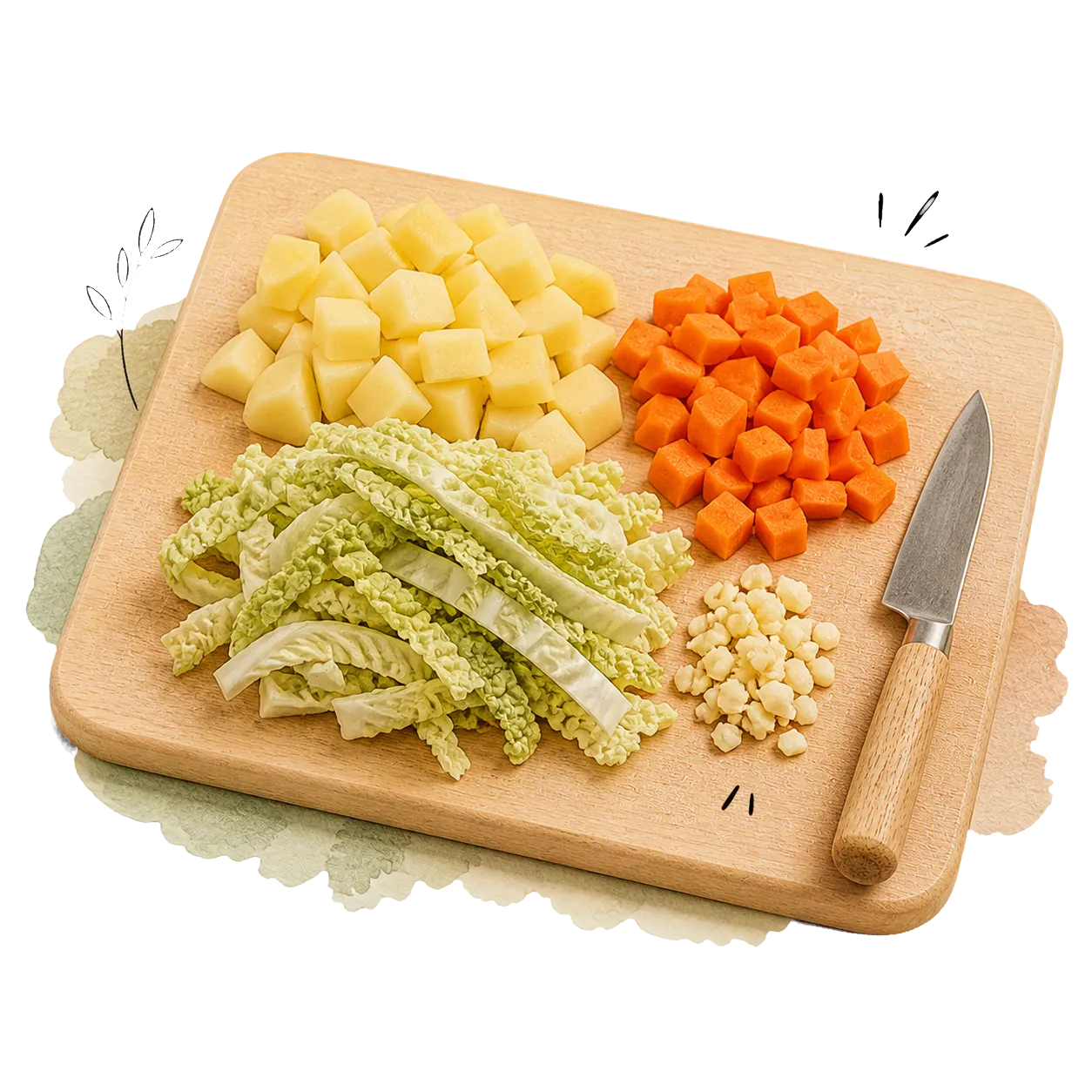
Peel the potatoes and cut them into small cubes or pieces. Cut the carrots fairly small as well, slice the Chinese cabbage into broad strips and finely chop or slice the garlic.
Roll the pizzoccheri
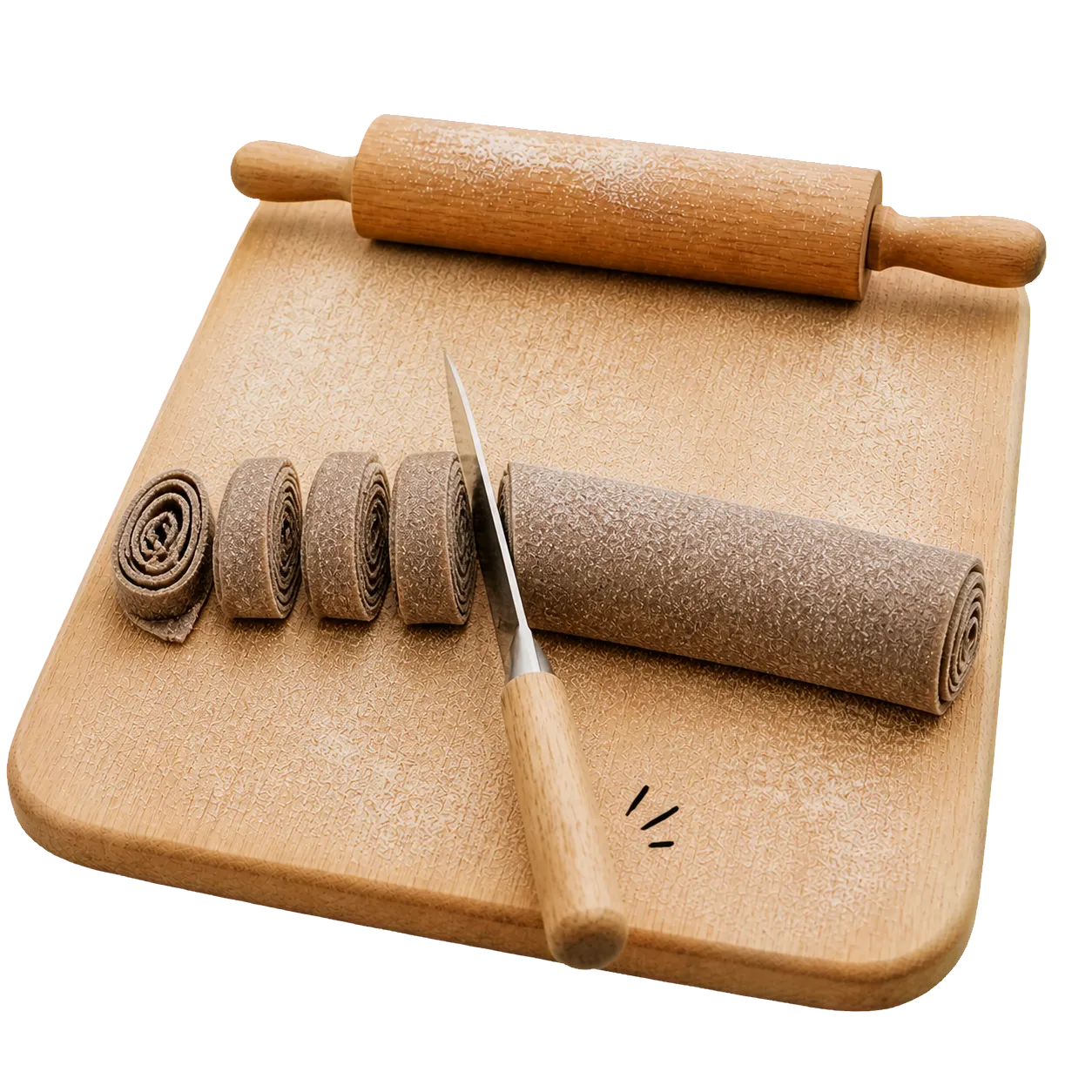
Dust the work surface generously with buckwheat flour. Working in portions is easiest: roll the dough to about 1–2 mm thick and dust it repeatedly to prevent sticking. Lightly flour the surface and loosely roll the sheet into a long roll. Starting at one end, cut the roll crossways into pieces about 8–12 mm wide. Carefully separate and unroll the cut coils, then dust them lightly with flour again.
Make the cashew Parmesan
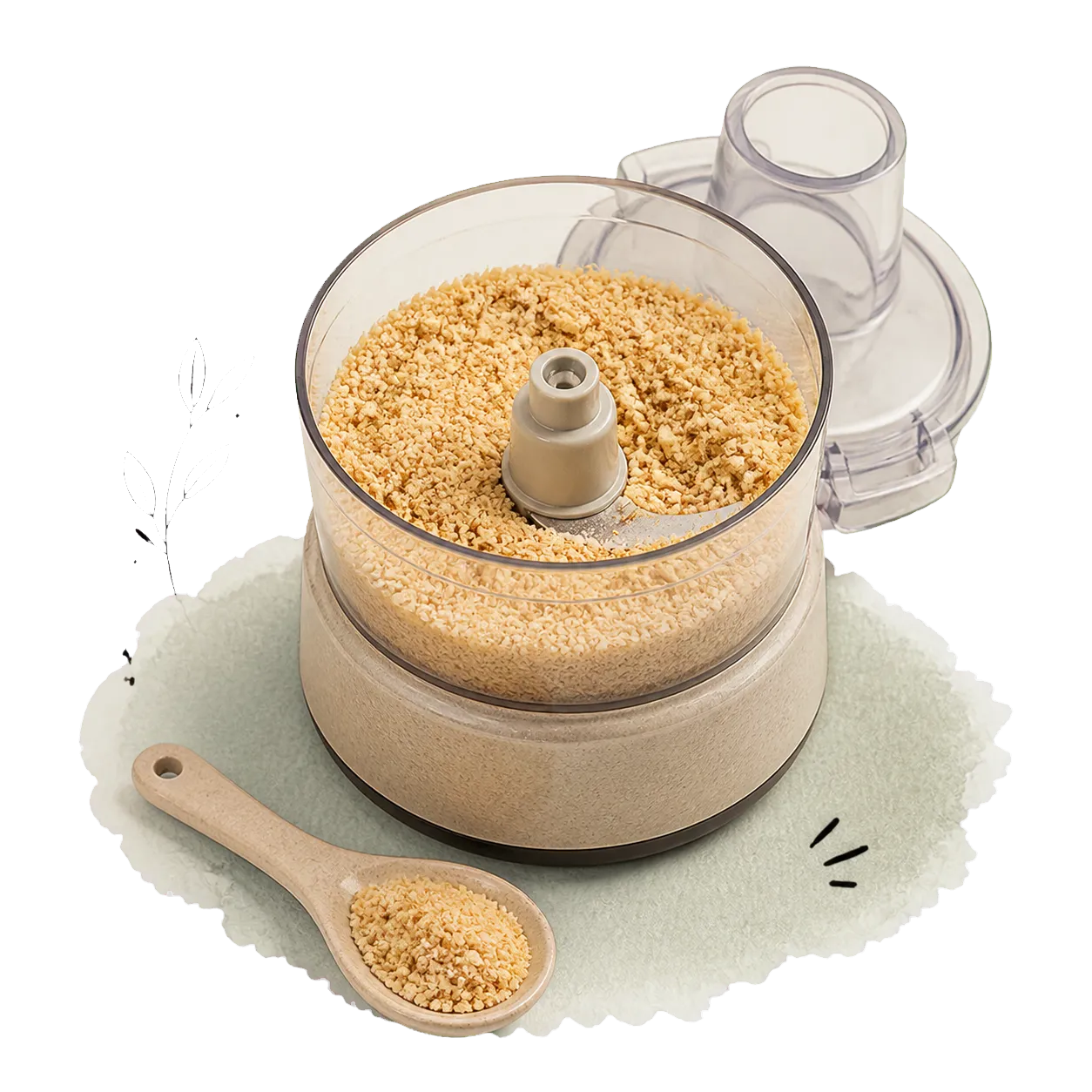
Put the cashews, nutritional yeast, vegetable stock powder and garlic powder in a blender or food processor and pulse very briefly. Taste and add a little salt, nutritional yeast or garlic powder if needed.
Cook the vegetables
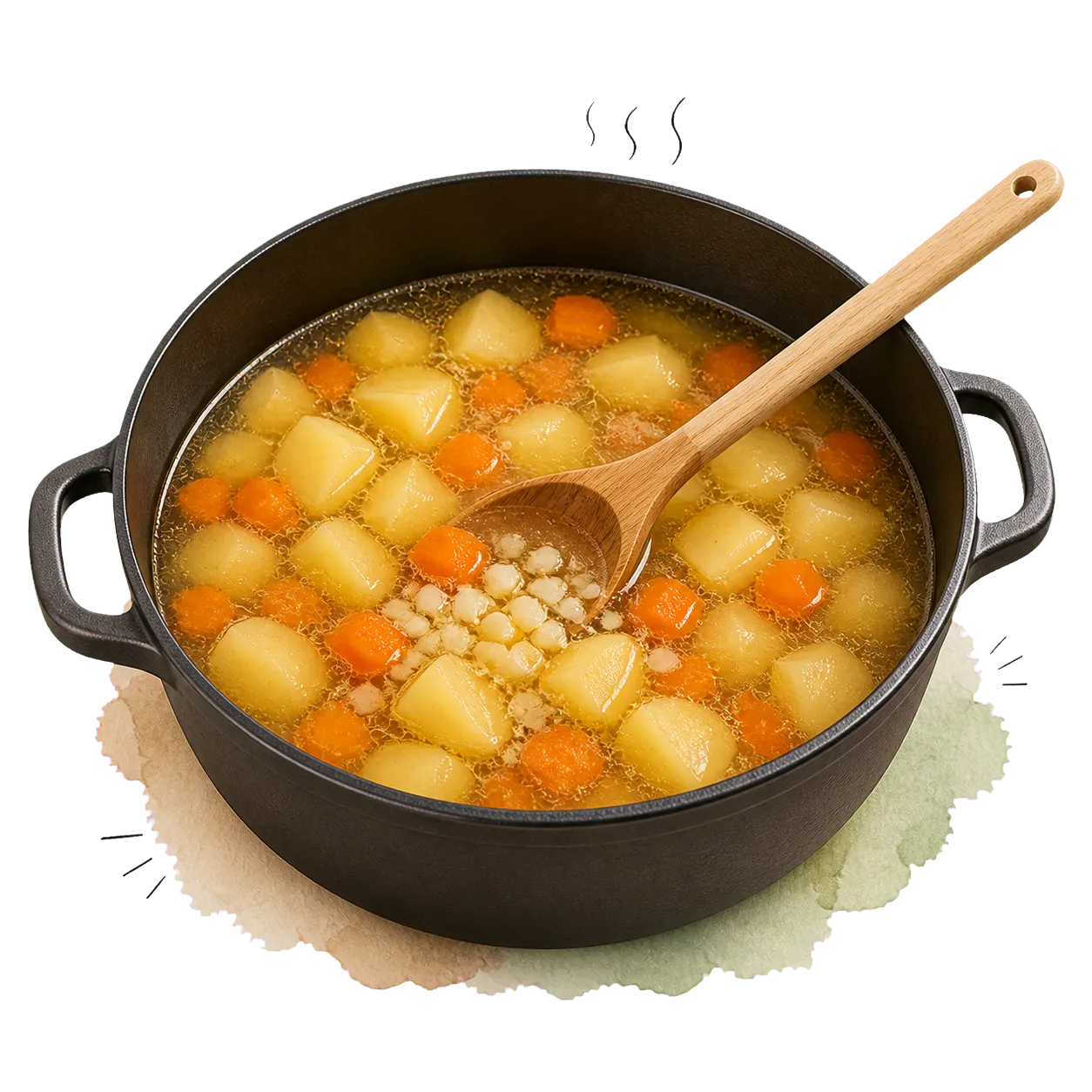
Bring a large pan of vegetable stock to the boil. Add the potatoes and carrots and par-cook for several minutes, until they are beginning to soften. Add the garlic.
Add the pizzoccheri and cabbage
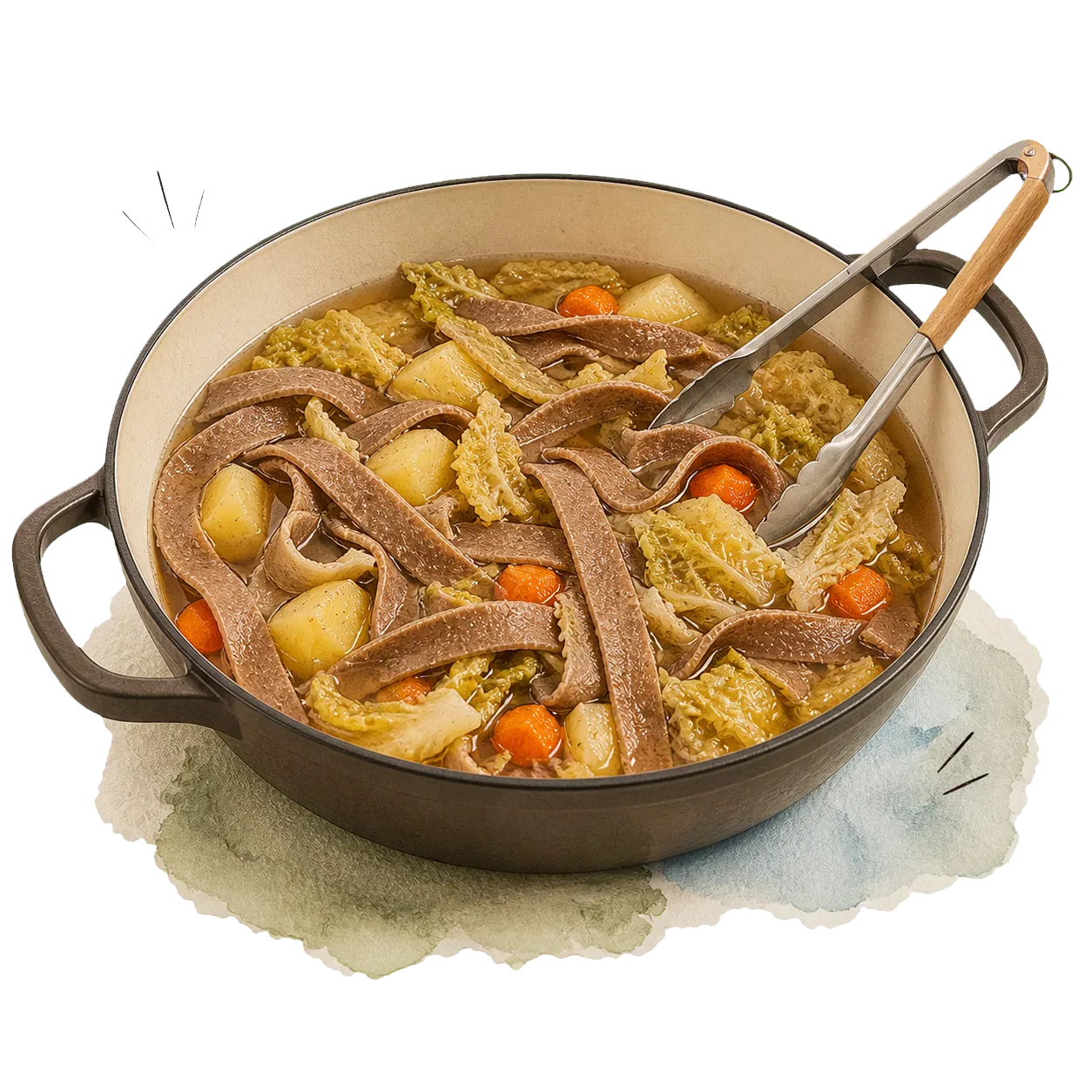
Carefully add the fresh pizzoccheri to the stock, followed shortly afterwards by the Chinese cabbage. Cook everything for another 2–4 minutes, until the pasta is done.
Layer and serve
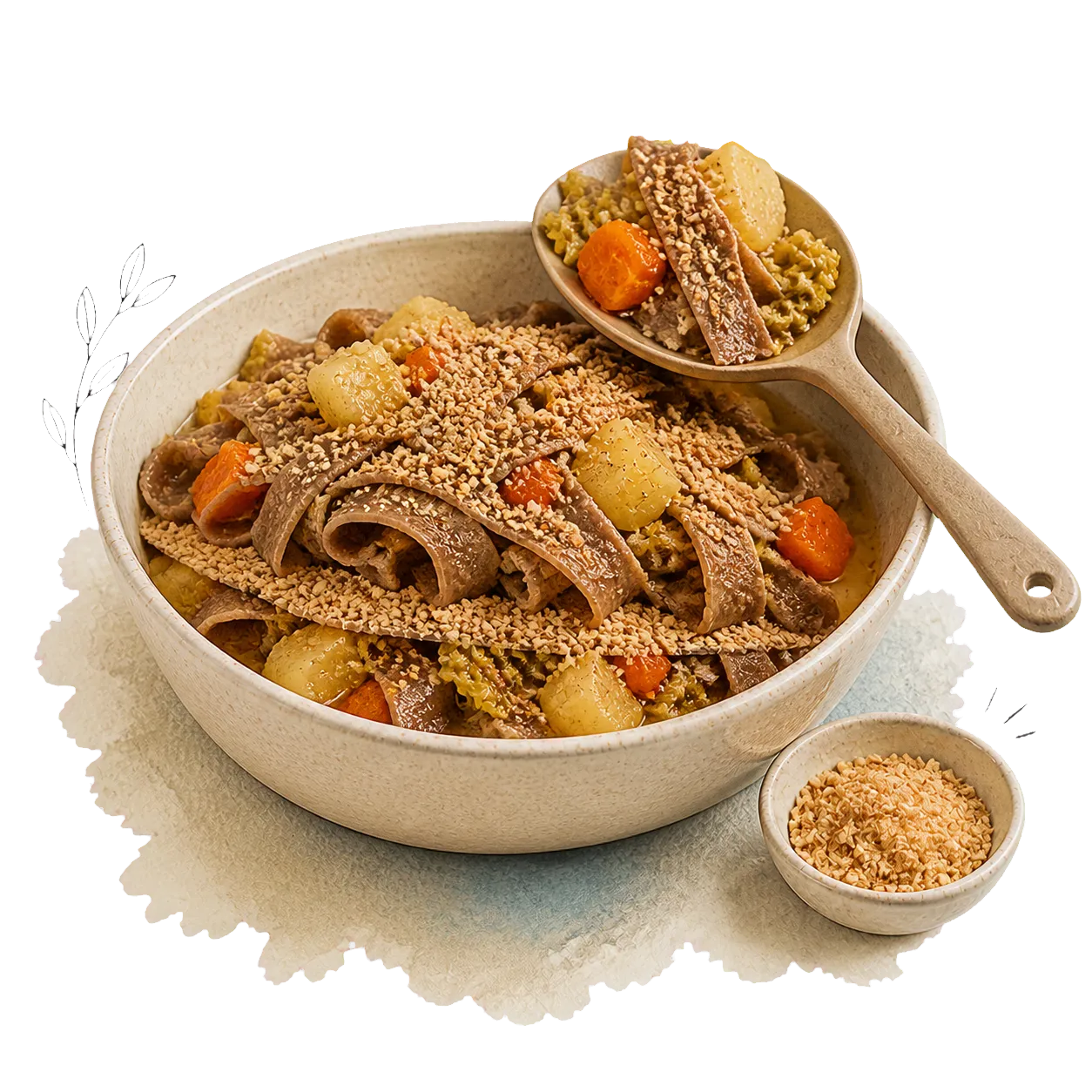
Lift the pizzoccheri and vegetables from the pan with a slotted spoon and transfer them straight to a large bowl or serving dish. A little stock may come with them. Alternate layers of pizzoccheri and vegetables with cashew Parmesan, finishing with a generous layer of cashew Parmesan.
Nutrition
Estimated values for 3 regular portions. Calculated with 2.5 garlic cloves, 2.5 tbsp nutritional yeast, 1 tsp vegetable stock powder, 3/4 tsp garlic powder and 0.5 g salt in the dough. Additional buckwheat flour for rolling, optional adjustments and the indeterminate amount of absorbed cooking stock are excluded.
| Whole recipe | Per regular portion | |
|---|---|---|
| Energy | 6,450 kJ / 1,535 kcal | 2,150 kJ / 512 kcal |
| Fat | 46.2 g | 15.4 g |
| of which saturates | 8.8 g | 2.9 g |
| Carbohydrate | 204.7 g | 68.2 g |
| of which sugars | 24.6 g | 8.2 g |
| Fibre | 32.9 g | 11.0 g |
| Protein | 58.1 g | 19.4 g |
| Salt | at least 2.8 g plus cooking stock | at least 0.9 g plus cooking stock |
The values use Bundeslebensmittelschlüssel 4.0. Stock, brands, the actual water quantity and portion size will change the result; salt cannot be estimated reliably without knowing the quantity and absorption of the cooking stock.